

The challenge
Galeries Lafayette's catalogue spans hundreds of maisons, each with its own imagery standards, seasonal rhythm and merchandising rules. Its consumer-facing platforms had to carry that variety, keep each maison's character and be ready before a fixed launch date.
Luxury imagery is heavy by design. High-resolution product and editorial photography is what earns a customer's trust in the price, and it also slows pages on the mobile connections most customers browse on.
Beneath that sat an integration problem. Inventory, pricing and editorial content come from separate systems on separate refresh cycles. A storefront that shows an item as available when it has sold out costs more at the luxury end than anywhere else.
Our approach
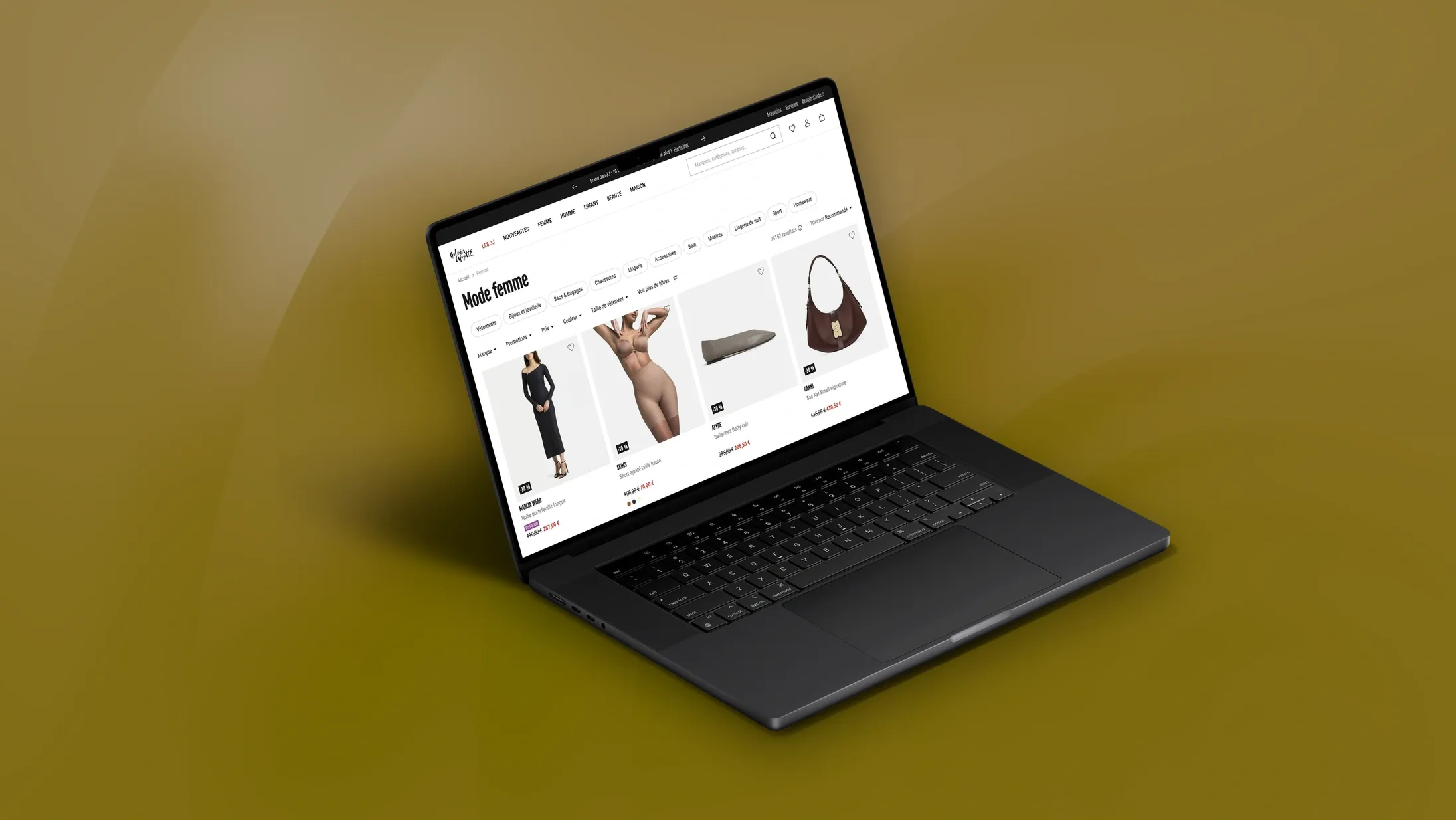
We took on the design and engineering of the consumer-facing platforms ahead of launch. We built the front end and the service layer as separate concerns. A React front end consumes a Laravel API that normalises inventory, pricing and editorial content into one contract. The storefront reads every field the same way, whatever system it came from.
We treated imagery as an engineering problem. Responsive delivery, format negotiation and lazy loading below the fold keep the resolution that carries the brand while moving it off the critical rendering path. AWS handles delivery and caching.
What we built
Ahead of launch, we designed and engineered a React storefront on a Laravel service layer on AWS. A normalised product and inventory contract spans the upstream systems, responsive image delivery keeps editorial resolution, and merchandising controls work maison by maison.
“On the luxury side the real problem was speed, not design. They fixed both.”



Team
- Engagement Senior Partner
- Hannan Hakim
- Chief Technology Officer
- Swapnil H
- Chief of Operations
- Arjun Patni
- Principal Software Engineer
- Dhanashree
- Senior Project Management & Operations
- Chinmay C
- Engagement Director
- Rima
Our learnings
- 01
In luxury, image quality is part of the product. Delivery architecture protects it better than compression.
- 02
Normalising upstream systems into one API contract did more for the storefront than any front-end tuning.
- 03
Stock accuracy matters most at the top of the market. A false 'in stock' can cost a client relationship.
- 04
Each maison's merchandising rules have to survive the platform. A uniform grid erases what customers came to see.